Interview with Gab Cinque
An In-Depth Discussion with Stellar New Jersey Songwriter and Vocalist

[This post is too long for email and can only be seen in its entirety on the page.]
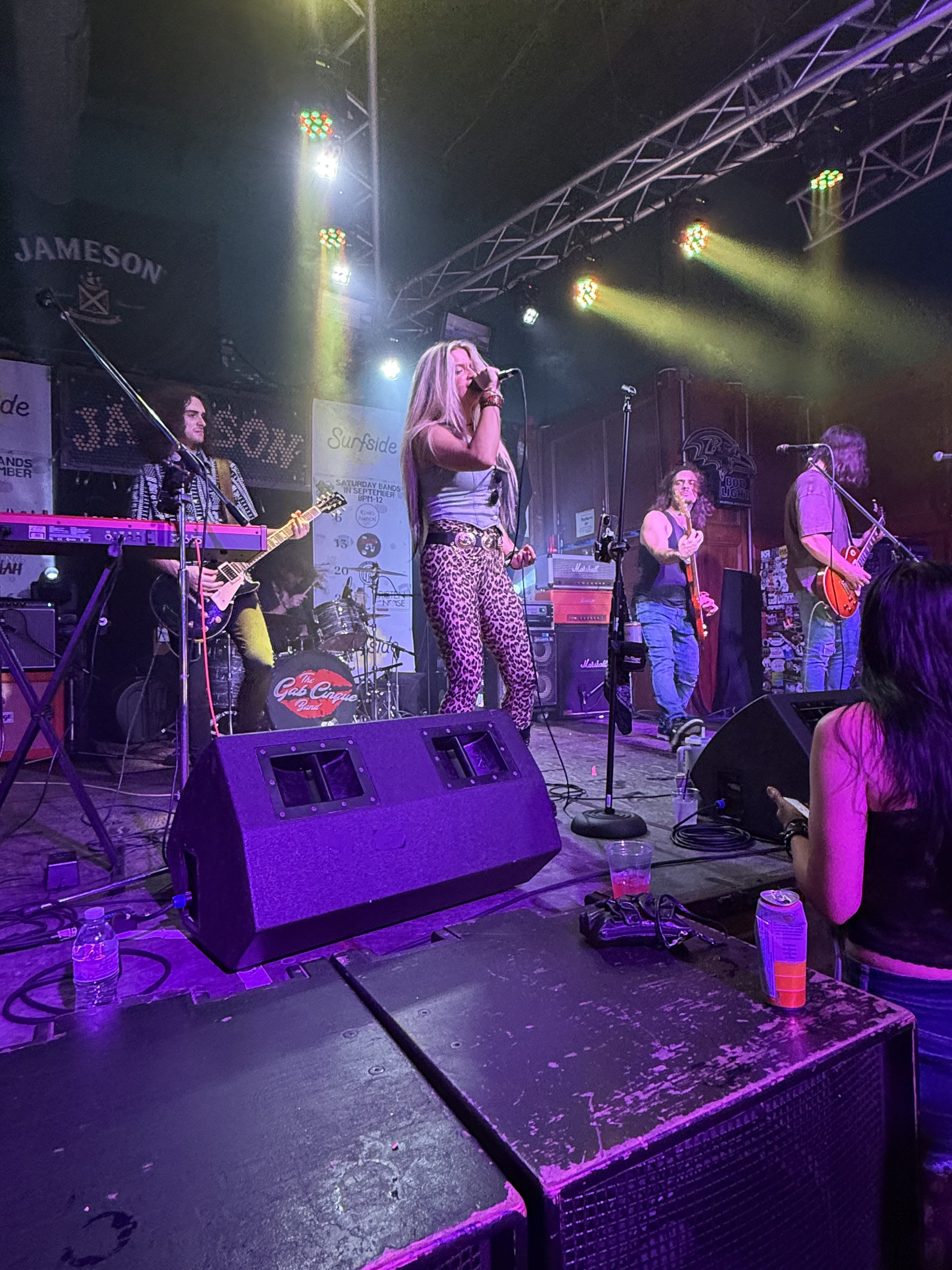
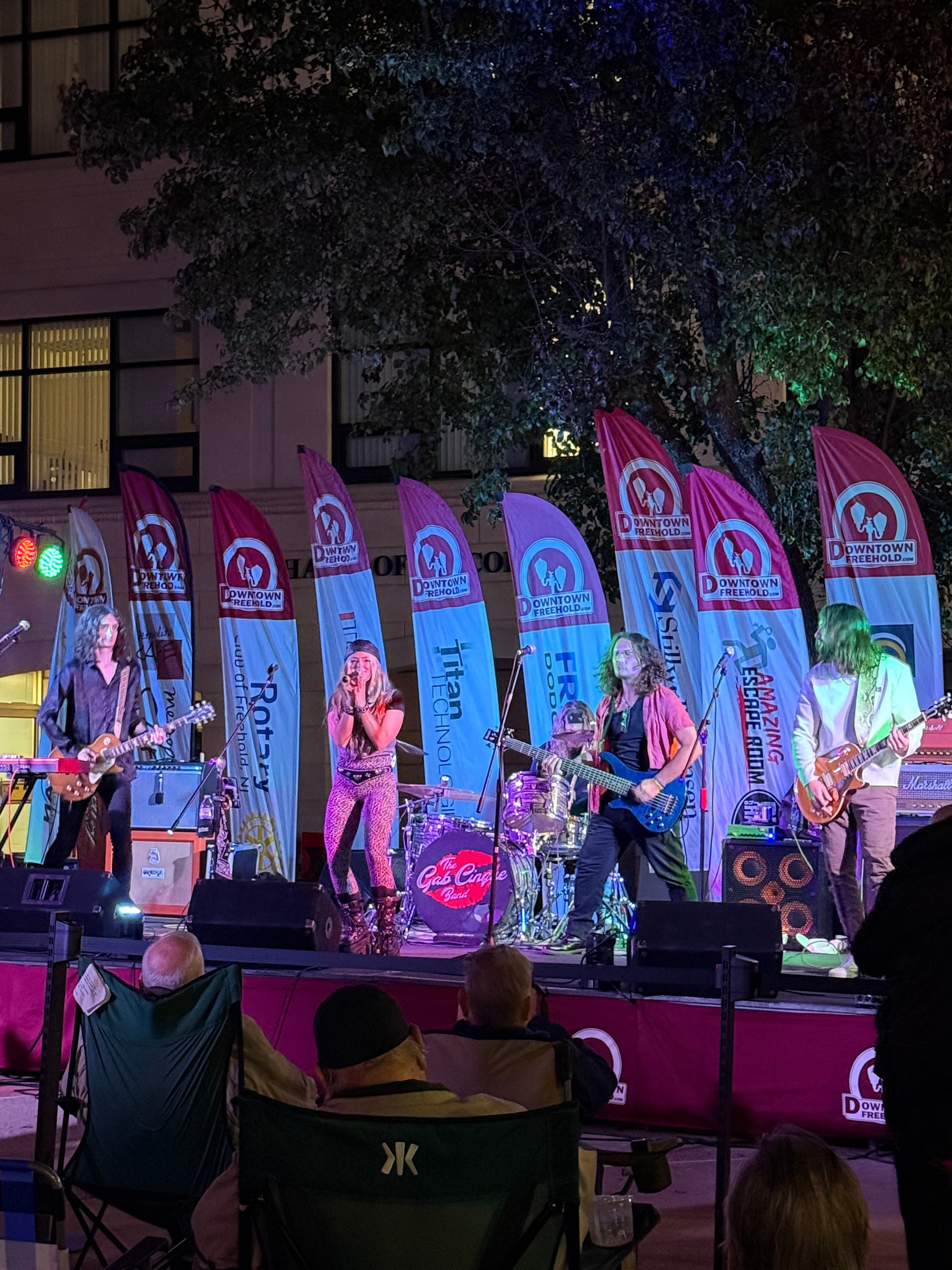
Gab Cinque has been astounding audiences up and down the East Coast for over three years. Cinque [pronounced CHIN-kway] is a vocalist, front woman, songwriter, and record producer, not to mention sometime multi instrumentalist and teacher. Her band The Gab Cinque Band has released the EP Highway Junkie (2023) and the LP The Wheel (2024) and performed in front of crowds from Boston to Maryland and beyond. (If interested, read my review of Highway Junkie here. Read my review of The Wheel here.) The band is scheduled to debut in Florida (Key West, specifically, at Sloppy Joe’s) from April 15 through 21. She and her songwriter partner/right hand man Fran O’Brien, who sometimes perform together as a duo, will perform at Low Dive in Asbury Park for the first time on December 6 in a special performance (per promoter Peter Mantas) as part of the Asbury Park Santa Run. The duo will perform on the West Coast for the first time in January (in Santa Cruz, California). The Gab Cinque Band will return to the Wonder Bar in Asbury Park, New Jersey, where they introduced The Wheel, a stellar longplayer, on its day of release, December 6, 2024. They will play at an event there, part of the annual festival Light of Day WinterFest 2026, on January 18 and headline the venue on April 10, a week before their Key West debut. Whether with just O’Brien or the full band, Gab Cinque and company are not to be missed. Cinque’s confident, puissant vocals and commanding stage presence are at the center of a multifaceted repertoire of originals and covers. O’Brien’s prowess as a composer and guitarist/keyboardist colors all of their tunes and complements Cinque’s lyrics, which are colorful both literally and figuratively (as you can read at length below). Matt Stanley’s skillful lead guitar in welcome in an age of sloppiness and ineptitude. The rhythm section of bass guitarist Aaron Manzo and drummer Anthony Flora (the newest member) ground the ensemble with arresting lead flourishes of their own, and Manzo’s baritone vocals are a highlight of the live shows. Just two of the facets of Gab Cinque’s art that distinguish her are her painting-inspired, color-themed lyrics and her unique lyrical temperament and context in a hard rock genre that is, at times, simple to an overwhelming degree. And, in a disproportionately male, sometimes stereotypical, genre, lyrics like “Savin’ It (For You)” are sui generis and should be heard (not written about).
The Gab Cinque Band will perform at Light of Day’s cover/tribute band night. It is unfortunate that the festival is not recognizing their first-rate originals, but any opportunity to see the band—or Gab & Fran, the duo offshoot—should not be missed.
Gab was kind enough to make room in her busy schedule to sit down with me at Cafe 360 in Freehold, NJ, her hometown, on Veterans Day and discuss all of the above and more. Her insightful comments, like her multimedia art, belie her years and evince experience, depth, and commitment far beyond that of a bar cover song entertainer.
Jeffrey Falk:
I know the band has a show coming up at the Wonder Bar.
Gab Cinque:
Yeah.
JF:
April 10th, right? And you had mentioned that you were planning on hopefully having a release around that time.
GC:
Yes.
JF:
Is there anything you can discuss about that?
GC:
Yeah. So we have, I would say about four songs now. “Tied-down Butterfly” is one of them, that new one you heard. And there’s two more that we’re working on demoing. This past weekend, actually, we got some of the instruments down. I don’t know if this is going to be the actual recording or if we’re going to go back to Shore Fire yet, but right now we’re recording at Fran’s house because he has like a whole setup there. Yeah, so we’re trying to demo those and basically I want to put out a couple singles. I don’t know if we’re gonna do one for the show and then put the others out later. It kind of depends on how fast we get stuff done. I wanted to have a release by this November, but we haven’t got to the studio. We’ve been so busy. So, we won’t have like four songs recorded, but [we’ll] put them out as singles this time and then start working towards our next bigger project after that. But, yeah, we’re definitely going to do a release. I don’t know which songs it’s going to be yet. Basically, I guess, whichever one turns out the best I think we’re going to try to go with first. But yeah, they haven’t been demoed yet. I definitely want to probably do “Tied-down Butterfly” as its own release because that’s more of like an acoustic kind of song. It’s probably going to be “Roll On”, if I have to guess. But we have another one that it might be that we haven’t played yet.
JF:
Is “Tied-down Butterfly” inspired by Heart?
GC:
Yeah, definitely. I was actually thinking about it the other day, and there was another inspiration I was thinking about with that song, but I’m blanking on it now. But yeah, it was definitely originally inspired by that song, “Dog and Butterfly”. But it kind of tells a different story than “Dog and Butterfly”. So, it’s inspired int he way of the concept, I guess, but not in the message.
JF:
I was really impressed by The Wheel, as you know. I was actually listening to it on the way here.
GC:
Thank you.
JF:
As I have written, albums have become, if not obsolete, at least obsolescent. Many years ago.
GC:
Yeah.
JF:
Even in the early 2010s, Rush were talking about how albums weren’t important [to audiences] anymore. They’re extremely important to me. One of my best friends out in California, Steven Schub, he did one album with his ska band, HaSkaLA. It was their first live performance, basically a recording of that, and that was it, just singles after that. Do you have plans for another album?
GC:
I do, but I think we want to do it more conceptually or like grouping songs in different ways. Now that we have a full, traditional album and an EP, now we kind of have the freedom to do however we want. We were listening to [Rush’s 1978 album] Hemispheres the other day, and I was like, we should do something like this, like no limits to how long a song is, and just kind of let it go as is. And also like Tommy, I love Tommy by The Who.
JF:
So do I.
GC:
It’s also my favorite Broadway show. I love how they did that. Just the whole concept of a concept album—it’s cool to me. Even if it’s like three songs or however much. That’s why I want to do the singles now, and I think I kind of planned it out in the way where we have EP and album because then if we have a couple singles … Now that we’ve developed our songs now I feel like we have a better chance of getting more traction on releasing singles. Then, when people like a song, they’ll go back and see we have like a whole catalog of music to look through. Because a lot of times you’ll hear a band’s debut single, and it’s like, wow, this is really great. But then there’s not really much to back up that they can make it, like a long-term thing and have that kind of traction because there’s just one hit and then you have to make sure you’re following and sticking along and if you want to see anything else they do. So I think that’s a big mistake a lot of these newer bands are doing, the newer rock bands. So I want to just put whatever feels right to put out. Not even in like a business aspect, just to see. Because the more I put out of my ideas, then the more people have to discover of them. And I feel like a lot of people just hold back and want to take the business route and do the hits and try to have that just social media aspect, but no one’s really focusing on the art itself anymore.
JF:
I would agree that, in general, they’re not.
GC:
Yeah.
JF:
This scene is perhaps an exception.
GC:
Yeah.
JF:
It was a pleasant surprise to me, but I’m not seeing much outside of it that’s art centric. It’s disappointing to say the least.
GC:
Yeah.
JF:
You had mentioned when you were working on it—I’m not sure about since—that The Wheel is a concept album. Would you like to describe or elaborate a bit on the concept behind it, or would you prefer to leave that to the listener?
GC:
So the concept of that isn’t necessarily [a story]. I see myself doing storytelling concept albums. This isn’t necessarily a story. It’s more of like the wheel, which was inspired [by] the color wheel. I was actually painting the cover of Cream’s Disraeli Gears, and I was using the color fuchsia. Then, I don’t know why it stuck in my head. Basically, every color has a song that I could think of, but I couldn’t think of one for fuchsia. So I thought, Okay, let’s write a song about it, like as a joke. Me and Fran were just hanging out. Let’s write a song about fuchsia because when you think of fuchsia you think of—I don’t know why—Stevie Wonder, Jamioquai … [their] song “Canned Heat”, that funky song. That’s kind of what inspired that. So then, I was trying to figure out what the cover of the album was going to be. “OK, color.” And then, for some reason I was just kind of thinking of the color of each of the songs, even if they were not done yet. A lot of them were just like instrumentals at that time. I was just creating a concept through what was … A lot of them were already written. So … how do I make this a concept?
So, I’m trying to think of the order of the songs. It’s funny; I don’t know off the top of my head.
JF:
“Let It Out”, “Highway Funky”, “Fuchsia”, I think, is the third.
GC:
Yeah. So, “Let It Out”, that one … I actually wrote the guitar riff to that one.
JF:
Really?
GC:
So I started messing with that, and then it turned into “Let It Out”. That’s the only thing I can really take musical credit on.
JF:
Did you play on the track?
GC:
No, I didn’t. In the future, I plan on at least doing something just to say I did. Because the thing is, when you have Fran in the room, you know, you don’t really want to touch any instruments. [laughs] It’s like let the master do his work. But yeah, with “Let It Out”, we were trying to figure out the order of the tracks, too, and this one just sounds like a starter. Then “Highway Funky”, we put that there as like an ode to “Highway Junkie”. And I actually don’t know how [that happened]. The reason it turned into “Highway Funky” is because I just started singing that at the end. It works like kind of with the same melody as “Highway Junkie”. So it’s kind of like two songs in one in a way. It totally changes after that chorus. It’s like a mini-song before “Fuchsia”. But it’s all inspired by Betty Davis.
JF:
Oh, I didn’t know that.
GC:
Not the actor, the old singer.
JF:
Miles Davis’s wife, Betty Mabry?
GC:
I don’t know. Maybe.
JF:
I’ll look into that.
GC:
But there’s this one song. Funny enough, the guy who showed it to me is Joe Baracata’s bass player. He was in the back room at the Wonder Bar one time, Chris Busk, and he comes up to me with a CD he burned himself of this album. And he’s like, “You need to hear this.” [Gab checked her cell phone.] Yeah, Nasty Gal, They Say I’m Different … It was this song, “If I’m in Luck I Might Get Picked Up”, that inspired a lot of that. I just love songs with like that in the pocket kind of feel like “Dragon Attack” by Queen—stuff that makes you feel like wow, that’s a beat. Of like [ZZ Top’s] “Cheap Sunglasses”, something that’s just like you feel that in the beat.
What was the question? [laughs]
JF:
I think I was asking about the concept behind The Wheel. Or was there a more recent question?
GC:
Oh, yeah. Yeah, so that was “Highway Funky”. Then “Twisted Position”. That song has been written for awhile. … A lot of these have been written for awhile. There’s some one there that we just kind of threw on there. We have it so we’re going to put it on there. We’re just gonna let it go. Or songs that we had some of the old lineup on. We [thought] we’re just gonna put that out and move on.
JF:
Steven Franklin?
GC:
Yeah. We had Anthony Walton on our drums. [Anthony] Flora didn’t do any of this. This was all Walton and this other kid, Jon Salvo, who played drums, too, on “Scorpion” and a few others. I forget. I forget which ones.
JF:
I still have those cards you sent me for each song, for lack of a better term, with the performance credits on them. So I can look back at that. [Salvo played drums on “Scorpion”. Franklin played bass guitar on “Greens & Blues (Jam)”.]
GC:
Cool. But yeah, it’s more like the colors, and The Wheel thing is more of like each song to me had a color to it. So it’s kind of just like that overall circle of the start to finish and different feelings in color in the songs. So, yeah, it’s not necessarily like a story concept. It’s more of a picture kind of concept.
JF:
Yes. They’re not always story concepts, and some the more … I don’t like the word abstract in this context, but subtler concepts can be some of my favorites. Queensrÿche’s Promised Land would be an example. But I also love the story albums, including Tommy, Queensrÿche’s Operation: Mindcrime … Though any concept album … I think is a welcome diversion from today’s short attention span. Everything’s a single.
GC:
Yeah.
JF:
It’s a short video. It doesn’t add up to much. It doesn’t integrate.
GC:
I know.
JF:
It’s not thematically driven. So, you definitely did an excellent job with that with The Wheel.
GC:
Thank you.
JF:
Thank you.
You are a gifted painter. You painted the cover of The Wheel. I know you like to paint [other artists’] album covers. I know that. I’m not sure what else you paint. Do you think there’s a significant connection between your painting and your music, or are they separate endeavors?
GC:
I definitely think there is a connection. Usually, I paint when I don’t want to sing or don’t want to do music or it’s back and forth. When my painting’s drying, I start playing. I definitely think a lot of things that I paint kind of capture the mood of what I want to write next or kind of put me in that inspiration of whatever world I’m painting in, whatever colors I’m using kind of helps me figure out the next idea musically. So yeah, I definitely do think there’s a correlation to it. Like when I paint heavier music or darker colors and using more blues and reds and stuff like that, it gives me more of like a harder rock kind of sound and feel whereas if I’m painting Stevie Nicks then I’m gonna kind of put myself in that musical mindset for however long until it’s done. That and also just listening to records that I find at Goodwill. I go to Goodwill and just feel like whenever I come across a really good record … Okay, it’s finding me for a reason. One time I just found … It was a Men at Work … Which one is it? It has a weird name. [“Dr. Heckyll & Mr. Jive”]
JF:
I’m not familiar.
GC:
Whatever it is, I was super into that for awhile, and that kind of was living in my head. Same with Steely Dan, we’ve had phases with that. Or Fran will show me a song, and we’ll listen to the whole album in a car ride. That’s kind of the music we’re playing for the next week. So, yeah, art definitely inspires. Any type of art, music, painting, all of it inspires it all. Even sometimes when I don’t have any ideas, I’ll go read a random book and write about what I read on one page or something like that.
JF:
You mentioned some of their influences, and they’re diverse. You definitely have a harder rocking sound, not necessarily every single song. Your originals are diverse, but I think it’s fair to say that if you’re going to put some kind of genre label on what you’ve been doing, it’s a hard rock …
GC:
Yeah. Definitely.
JF:
… maybe even a metal sound.
GC:
At the Elephant Talk Indie Awards, we won best hard rock/metal album, which is funny because I was like metal?
JF:
For The Wheel?
GC:
Yeah. So I don’t know who we were even against. But yeah, it’s funny because at the event there were actual metal bands, like these older guys, fully screaming in this thing. So, yeah, I guess they considered us metal, but it’s pretty cool. But then, it’s funny because a lot of awards shows don’t even focus on rock in general. It’s either pop/rock or hard rock/metal. So they kind of eliminated the classic rock sound out of award shows and stuff like that.
JF:
You certainly do a lot of those songs, classic rock songs. You’ve done “Me and Bobby McGee”, all kinds of things. I don’t know if you still do; I know you did Joni Mitchell [“Big Yellow Taxi”].
GC:
Yeah. I’m actually doing— On Thanksgiving Eve, before us is The Last Waltz show Gordon “Bunker” Strout does, and he asked to sing “Coyote” with him. So I’ve been learning that.
JF:
Is that at R Bar?
GC:
At Bar A.
JF:
Oh, there’s something similar going on at R Bar.
GC:
Oh, really? Yeah, it’s right before we go on at Bar A. They’re the show before us. I’m going to do “Coyote” for that. And, at that point, if I’m learning the whole song, it’s super hard. So me and Fern will definitely play it because I’m not learning it for just one night. [laughs] It’s a tough song.
JF:
I ran into our friend Avo [Kubar] Sunday night, and he thinks that some of these mellower older songs you’re only doing to please some of the older people in the crowd. But that’s not the impression I hear.
GC:
No, I get excited to do those songs. I like doing the slow [songs]. If I could sing “River” by Joni Mitchell, “Coyote” and “Blue” and all those songs, Gordon Lightfoot, Carole King, I love doing that stuff. We don’t do it in these bars because it wouldn’t go over. So, we do it at Sandy Mack jams. That’s why we open for Sandy Mack. We don’t get paid to do those. We just go on up there just so we can play songs that only that crowd would appreciate. I guess it is, it’s double. We are doing it for the older people, but it’s because they’re the only people that want to hear it and we want to play it.
JF:
Do you do any song that you’d rather not do, or do you like them all?
GC:
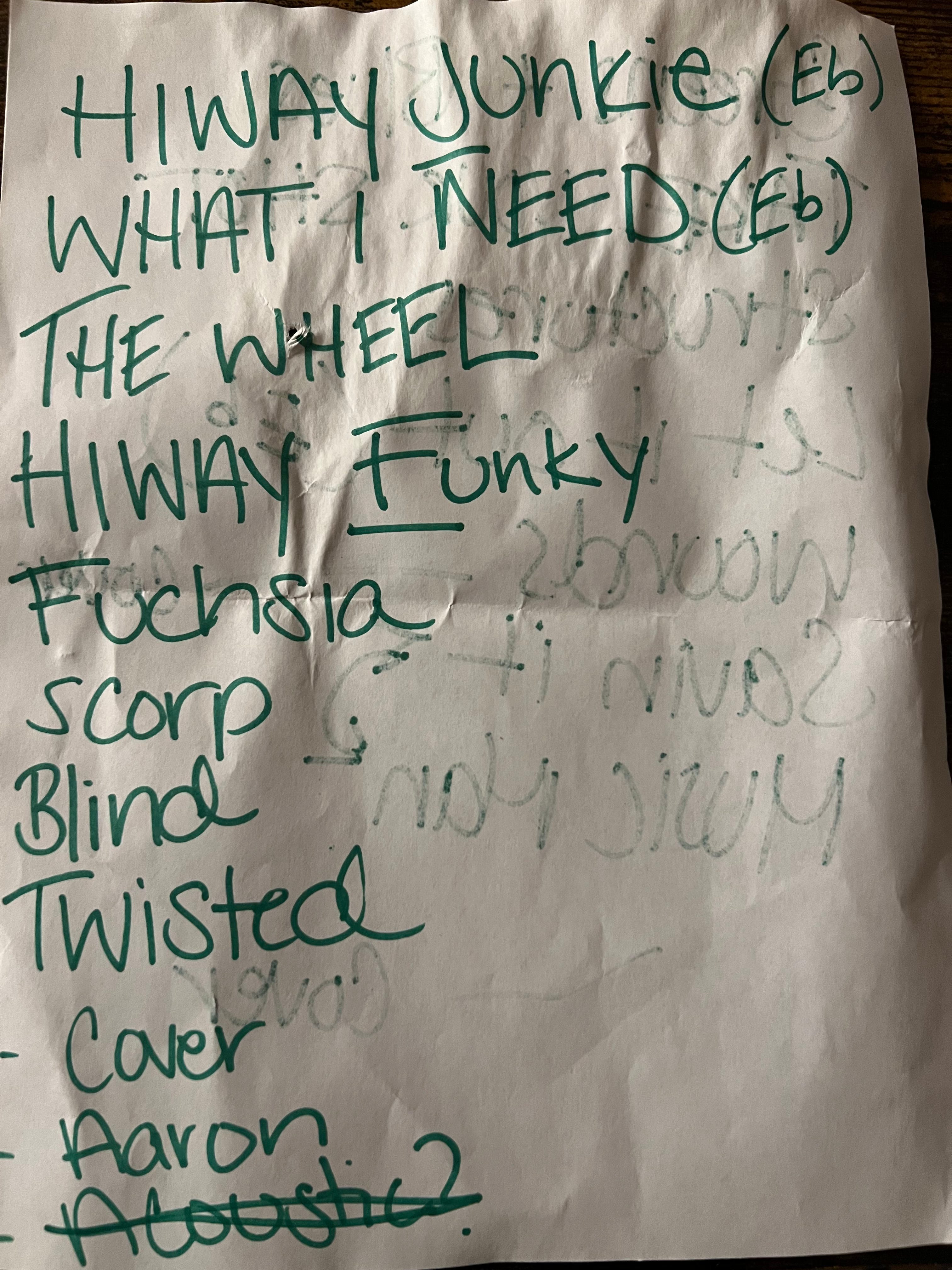
When we have to do stuff for … bridal parties and play [The Killers’] “Mr. Brightside” and that stuff and the songs I’ve been playing for years, like Carrie Underwood and all that, I’m kind of just on autopilot. So it’s not that I hate doing it because I love singing anything I get to sing, but it’s definitely not the songs I’m looking forward to in the night. I’m always more looking forward to whatever’s newest learned, basically, because playing these songs every single weekend, it gets old. That’s why we don’t do a setlist, and we switch it up every night because it’s not the same show every night. And we’re kind of picking from a repertoire in our heads of like four hundred-plus songs. We don’t really practice much, either.
JF:
It is rather remarkable that you don’t [use setlists]. If you’re doing a lot of covers, if you’re playing, for instance, at Bar A or in Dewey Beach, Delaware or Bel Air, Maryland, where I saw you, there’s no setlist but it looks like it’s all planned.
GC:
Yeah.
JF:
Is there a secret behind that? Do you use hand signals like Frank Zappa did?
GC:
Not really. There’s like a couple songs that we could use certain hand signals for, but it’s mainly just me communicating with Fran. I’ll always go over to him and say the song. Or whenever I know that there’s a part where he’s going to have a second and quiet, I’ll just say it to him really quick. It’s just really the onstage communications that’s the most important. Or when I want Aaron to sing, I’ll just point at him. And we look at each other and figure it out. But yeah, we all just talk to each other on stage the whole night, and that’s been the most important thing. I don’t feel any sort of uneasiness about what they’re gonna do next because I know we’re all communicating and on the same page for, like, everything.
JF:
You play often in the Middle Atlantic area. You seem to almost have a residency in Dewey Beach, Delaware. You play in Maryland often.
GC:
Yeah, we’ll be there this Friday. Fulton.
JF:
How did that come about? Did you just have an opportunity and you went over well, and they kept inviting you back?
GC:
Yeah, basically. Well, we got with our agent Frank at AEM, and we did that right after I left my first band. But that first band I was in kind of like showed me the whole scene that there is there. So we went there a couple of times, but it wasn’t a good band. And then, I always wanted to bring my band there because I knew that there’s always a crowd in Delaware. And they love music. They come out for us. They buy merch. I think we played there … We got a couple dates there in that summer, that first year [2022], and they just loved us. The first year the owner [of the venue Rusty Rudder] posted and called me the Queen of Dewey. They painted us on the wall. It was just crazy how much quicker the traction grew over there than in Jersey, where we’ve been trying for years to get the recognition around here. You kind of have to be someone to matter in this area, really. Or just be in the area and only be in the area because people in this area are so … They just stick to one thing, and then they go to the other thing. But, if you’re not one of the favorites, no one’s going to your shows. So that’s the tough part about this area. Everyone has to be someone, and everything knows somebody. And you have to know all the same people to get the good gigs and all that stuff. And it’s just way more to keep up with here, for some reason, than anywhere else we’ve ever played. It’s [easier] to get followers, and they’ll come see you everywhere else. But around here, you have to be so consistent, basically.
JF:
Do you like playing at Jamian’s Food and Drink [in Red Bank]?
GC:
I do, yeah. And Jamian’s such a good guy. He’s always telling us to play more originals and going up onstage and shouting it out and stuff like that. So, he’s probably the most supportive bar owner I’ve ever met.
“Savin’ It (For You)” at Jamian’s Food and Drink, Red Bank, New Jersey, January 10, 2025
JF:
You’re going to Key West—right?—next year.
GC:
Yeah. We are.
JF:
Right after the Wonder Bar?
GC:
Yeah.
JF:
Do you have anything planned, special, for that, or is that something you want to discuss?
GC:
Well, we definitely— That’s why I’m glad we’re doing the Wonder Bar before because I want to do the release because I think it’s good to kind of release something in Jersey and then that whole week in Florida just talk about that and promote it and try to get … That’s a very touristy area, too, so that stuff can travel from there. That’s why I’m also thinking about maybe doing two releases. I don’t know when or how we plan it. Maybe do three: One a couple of weeks before the Wonder Bar, another one the day of the Wonder Bar, and then another one while we’re in Florida. I don’t know. Or maybe I’ll space them out a little more. We really don’t know what we’re gonna do yet. We’re also very picky about recording. So, once we start recording it, it could take a long time because we get really picky and perfectionist in there.
JF:
While you mentioned the subject of recording, you and Fran produce your own recordings so far. Are you still going to produce them?
GC:
Yeah, for the most part. Some of the guys in the band will come to us with some song ideas, and we’re now that our bandmates are all on the same page with music, we have a great lineup now. Everyone knows how everybody works. There’s no limitations to what we’re able to do now because we’re tight as a group musically. So now, it’s about … We’re trying to get some songs out of Aaron. He writes songs, but it’s kind of hard to get them out of him. But he has a bunch of really good songs, so we’re gonna try to put some of those on there. Maybe eventually do some stuff with him singing on an album. Yeah, but me and Fran mainly produce everything. I’ve worked with Joe DeMaio from Shorefire. As far as producers go, we haven’t really … We’ve talked about it, but it’s not going to be right until the right person comes to us. So I don’t really want to go seek somebody out for that. There’s too many cooks in the kitchen, and Fran has such great ideas, too. Even just between the two of us, sometimes it gets tense because we’re trying to figure out like we’re not on the same page of what we’re writing and how which part should be fixed and stuff like that. So, having another person on top of that, I don’t know if it would work.
JF:
I think you’re doing an exceptional job with Fran.
GC:
Thank you.
JF: I should know more about record production, but I do pay attention to it and I have my own favorites: Bob Ezrin, Peter Collins, George Martin … Do you have a particular influence as producers, or is this something you basically taught yourself or that you’re kind of doing ad hoc?
GC:
I never fully knew what the role of producer was until people starting saying we were producing our own record. Oh, this is how you do it. Find someone and sit with them and work on songs, and they’re there. And you get them done. I was always under the impression that producers’ role was they give us money and we produce it and maybe you give them some creative direction. So that’s why I’ve never really … If we went with the producer, I think it would be for money reasons. If they’re offering us money for direction, then that’s one thing. Unless I’m really, really big on somebody’s ideas. But at that point, they should just be in the band. But yeah, it’s more of really like just working with Fran. The trial and error of making songs. We had been writing songs for like years before we had a full song done. We would just try to write, and it wouldn’t work. And then we realized that the best method is usually when we work separate in terms of coming up with ideas or we’ll come up with an idea but not flesh it out too much. Let him do the demo and send me the song, and then I’ll do the lyrics and the melody and we piece it together from there. Because for a while, it’s just hard when you sit down with someone and you’re like, OK, let’s write a song. That’s not how you can do it. Everyone has their own ways of doing it, but that never worked for us.
JF:
How did you meet Fran? School?
“The Music Man”, The Wonder Bar, Asbury Park, New Jersey, December 6, 2024
GC:
No. I went to a friend’s studio. These kids reached out to me. They’re from Manasquan. “Oh, we have a studio. Do you want to record?” So then, for years, I did pop music and writing stuff with them and just kind of like shadowing them in their studio. I would go there after school every day. And then, when I graduated, I would go there all the time. And Pat Walsh, it’s called Dunlit Studios. They have like an entertainment company. He has a younger brother who’s my age who had a band. And they had asked me to do a show with their band. Fran was in the band. It was called So Shot. They still play. You’ve probably seen them. They’re like a big band. They have horns and everything. They’re all my age. And we went to Fran’s house for rehearsal. These kids invited me, and I didn’t know any of them. I thought, Wow. This kid’s house is crazy. He has this crazy whole recording studio, amp wall, everything. And then I realized how good he is because he actually, I think, played piano first in front of me with the band, and then he would pick up the guitar, and I was said, “Wow. You could play like that?” And I found out he was going to Berklee [College of Music in Boston].
JF:
I didn’t know he went to Berklee.
GC:
Yeah, he did. It was like the whole thing with covid and whatever. They weren’t able to go back for awhile because of the shots or whatever it was. So, well, we started a duo from the band because we were basically like, okay, we’re serious about this. So we thought, let’s start a duo before we were twenty-one for a couple years. I think it was … I think it’s been five years now of playing with him … if not six. I think it was 2019 that we started in the band together, the end of 2019. Then we started the duo for a couple years. His dad would come and do sound for us at The Salty Whale. It was like our only gig. Then he dropped out of school, and we started the band. Because while he was in school, I was in that band called The Rockets. And that’s how I learned about the whole cover band scene. So then, when he came back, all right, we’re gonna do this. And he didn’t even want to play covers at first. But I said, “If you want to make any money, then we could do this as a full-time job. If we play the covers, we’ll get to actually play the crowds.” We won’t have to fight for showcases at The Stone Pony and sell tickets to people that don’t want to see us. So, I definitely think that it was smart that we did the coves, and I think he would agree now. We have a lot of fun. It helps doing the covers because now we have such good stage chemistry, the whole band, we have fund doing that. So, it definitely helps the original show because a lot of people just come out, especially around here, as just original bands. But then, they go out and they perform and there’s no natural presence. There’s no, like, natural chemistry because they’re not doing it often enough and they’re not doing it to crowds that love it. So, they don’t know how to perform to an empty room because they’re not used to performing in front of massive crowds where it’s fun and everyone’s having fun there and they’re loving the band all night. Because now we could perform in a small room to nobody and still have that same energy with the performance because we’re so used to just being on stage now in general.
JF:
I wanted to talk a little bit about the band individually and collectively. I think each of them brings something unique.
GC:
Definitely.
JF:
And I still haven’t seen Anthony Flora too often, but I’ve seen him. He’s integrated well with the rest of the band.
GC:
Yeah.
JF:
I think his style is similar.
GC:
Yeah. Definitely. Way more than the last one [Anthony Walton]. We just wanted somebody like that. He and Fran have very similar styles. He’s like a very beg Zeppelin, Aerosmith, Stone Temple Pilots type of player. So, it matches Fran’s vibe really well. Same with Aaron, too, because Aaron and Anthony have been playing together since they were really young because their parents were in a band together. His dad plays with Guns for Hire and Colossal Street, both bands.
JF:
With Eric Safka [in Guns for Hire]?
GC:
Yeah. Tony Flora, the bass player, that’s Anthony’s dad. And Al Manzo and the Sheep Herders. Flora used to be in the Sheep Herders, too. So, they all have that big connection there.
JF:
Considering each member, is there something each of them brings that isn’t obvious? Is there one salient thing about [each of them] or is it kind of evident from the performances and recordings?
GC:
Hmm. Yeah. Everyone has different personalities, but we mesh so well. We’ve all become best friends so fast. They’re so crazy personality wise. It’s like Mötley Crüe the way we all act sometimes. [laughs]. It’s a lot of fun. But musically, I mean, Matt has a very different style. He’s more into the hair bands. He loves Steel Panther and Van Halen. He’s very that style and Ozzy whereas Aaron is very Jim Morrison. [Aaron singing “LA Woman” was a highlight of their performance at The Wonder Bar last December.] And Aaron actually really likes a to of ‘90s stuff. He loves Milli Vanilli. That’s his favorite artist. It’s like so random. [laughs] Obviously,
Fran speaks for himself. And Anthony, he has like this energy, and [he’s] just excited to be there. That’s the best thing about him. Because that was always our biggest problem with drummers is they were just miserable all the time. Didn’t want to be there. It wasn’t fun. One of our past drummers would always say he didn’t like playing the music we were playing. He wanted to play more modern pop music. We were like, are you kidding? So, we always just wanted somebody who was on the same page as us. So he was like the final piece to the puzzle now. I couldn’t see us having other members in this band because it feels so complete now with all the pieces which we’ve been wanting for so long.
Aaron Manzo singing lead on Van Halen’s “Runnin’ With the Devil” at Martell’s Tiki Bar, Point Pleasant Beach, New Jersey, May 10, 2025
JF:
Is it true that Matt approached you and said, “Are you looking for an extra guitarist?”
GC:
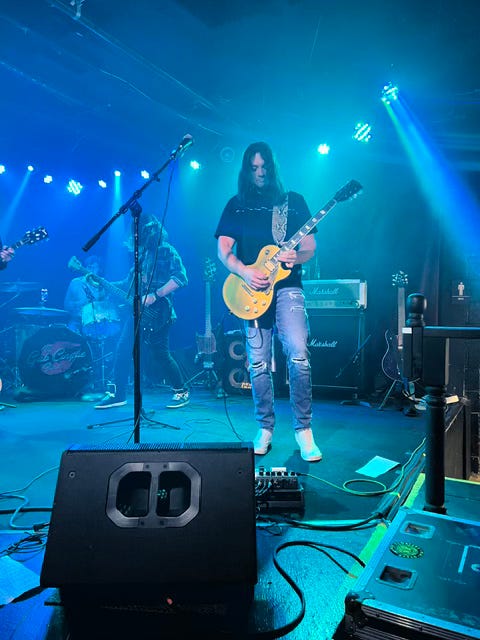
Yeah. That’s how he joined the band. Because we weren’t. Me and Fran knew of Matt. We followed him on Instagram. And we would always [say], if we ever want another guitarist, we’re gonna call this guy. And Fran was always very like, man, we don’t need another. But I knew that if someone came around that Fran meshed with really well, it would work. So, yeah. We were sitting around one night, and I thought, Why is Matt Stanley calling me? We had barely known him. And yeah, he said, “Can I join? Can I join your band”, basically. “Well, let’s jam and see, because maybe, like, in the new year, we can add you.” Then we jammed and said, yeah, he has to be in the band. And I wasn’t even sure at the time how it would work because I knew he was in a lot of bands, too. But he’s like our best friend now. He’s crazy. Absolutely. We just drove to Nashville this weekend just to go for no reason. Yeah, he’s nuts.
JF:
I’m interested in going back to the beginning. I’ve read, I think, that you did not come from a musical family. This was something you found yourself.
GC:
Yeah.
JF:
Was there a particular early influence that started this? Or was there a moment you remember an epiphany where you said, “This is what I want to do”, or was it more gradual?
GC:
Well, I always wanted to sing, even though no one in my family sang or anything. I remember them showing me Annie when I was little. So I always sang “Tomorrow”. When I was like three, I got up in front of my whole grandpa’s retirement party. It was like this massive banquet at the Molly Pitcher [Inn in Red Bank], and I sang “Tomorrow” into the microphone. There’s a lot of memories of me getting up. I always just loved being in front of a crowd and getting attention. And I think it was when I got my first solo in chorus, I thought, Oh, I’m good at something. Because I was really bad at school, never got good grades. So getting a solo was like, oh, wow, look what I could do. That, and I also just love singing. And I thought, Wow, I’m good at this. And it took awhile for people to catch on. And I would do auditions. I’d be in the ensemble of every show growing up util I would start getting lead roles and stuff. And I though, OK, maybe I’m good. But I couldn’t dance, so theater was tough in that sense because you had to be a triple threat performer. But I always knew I was good at singing. But, when you’re eighteen, how do you make a career in singing? You have to either do pop music or theater or something like that. So, rock wasn’t really something I thought I could do. I also didn’t know about cover bands either until I was in one. And then I realized that you could be a full time singer, and it’d actually be fun and not just auditions all the time. I was always in theater and it was just audition after audition after audition. I guess just the influence was being on stage, just loving attention that way. And the costumes and the makeup and all that stuff.
JF:
You teach voice, don’t you?
GC:
Yeah.
JF:
And guitar?
GC:
Guitar, yeah. I teach piano lessons, too, or like songwriting stuff, whatever the student needs, basically, we try to figure out. But yeah, I teach. I’m teaching today at 3, actually.
JF:
I won’t take up too much more of your time, but I just had a few more questions. And, I hesitate to bring up this topic in Freehold [also Bruce Springsteen’s hometown] of all places, but as someone who, maybe not quite like I used to be, is a fan of Bruce Springsteen, are you at all a fan of his or is he any part of your listening experience or influence?
GC:
No, not really. I know some of his songs, but my parents were never really too big into Bruce growing up. My neighbors were, but I never really was too big on the music.
JF:
I know some of your friends and fans are antipathetic to him, but I wasn’t sure.
GC:
I never really got into any of his music. I was more leaning towards like Bon Jovi growing up. I was into that. “Livin’ on a Prayer” was one of the first songs I sang when I was in the Rockitlive program at the Basie. I was like twelve, maybe. So, yeah.
JF:
Is there any one of your influences that would surprise people? Your influences and cover repertoire are so diverse that I don’t know that anything would be that surprising. But is there anything that no one knows about or is there someone you’d like to cover you haven’t yet?
GC:
[pause] Yeah, there’s a lot. We haven’t done a lot of the … I was always really big influenced on Queen and My Chemical Romance and even Lady Gaga. I loved the theatrical performers because they’re all so different, but they’re all so alike in terms of frontmen. And Lady Gaga herself and just that type of song. I want to do some more Queen stuff for sure. But then there’s also Dio. That stuff I want to do more of.
JF:
You did “Holy Diver”, or is “Rainbow in the Dark”?
GC:
We did “Rainbow in the Dark”. I don’t think we’ve played “Holy Diver” live, but we’ve rehearsed it a couple times. I want to do a whole stage show of cool stuff that we couldn’t do at regular gigs, like really tough material, like [Rainbow’s] “Gates of Babylon”. Stuff that’s more complicated than most of these bands are taking on, but that would be something down the road and we would need to find the right people for something like that.
JF:
We covered quite a lot. Is there anything we didn’t get to that you’re interested in promoting, whether it’s an upcoming performance, something else, or anything we did mention?
GC:
I don’t know if we said it, but I think we’ll be booked at Wonder Bar Friday, January 23. I don’t know what it is yet. I think it might be part of Light of Day.
JF:
I didn’t even know about that.
GC:
Yeah, ‘cause I haven’t promoted it yet. I just got the date sent to me, and they don’t really send information on things a lot over there. But, yeah, so I think we’re doing that part of Light of Day.
JF:
Is that band or duo?
GC:
I think it’s the band ‘cause it’s Friday. So I think we might have got a decent slot this year ‘cause usually we’re like the do at five o’clock on Sunday or something. But I think we finally got a good [slot]. Band, I’m hoping that’s what it is. Then there’s just the April thing. I think that’s it. We don’t have any music done yet so I can’t promote that yet. But in April, we’ll have something released.
JF:
Hopefully when it’s all done, maybe we can do this again.
GC:
Yeah, definitely.
JF:
Thanks for letting me interview you, Gab.
GC:
Thanks for having me.
JF:
I appreciate it.
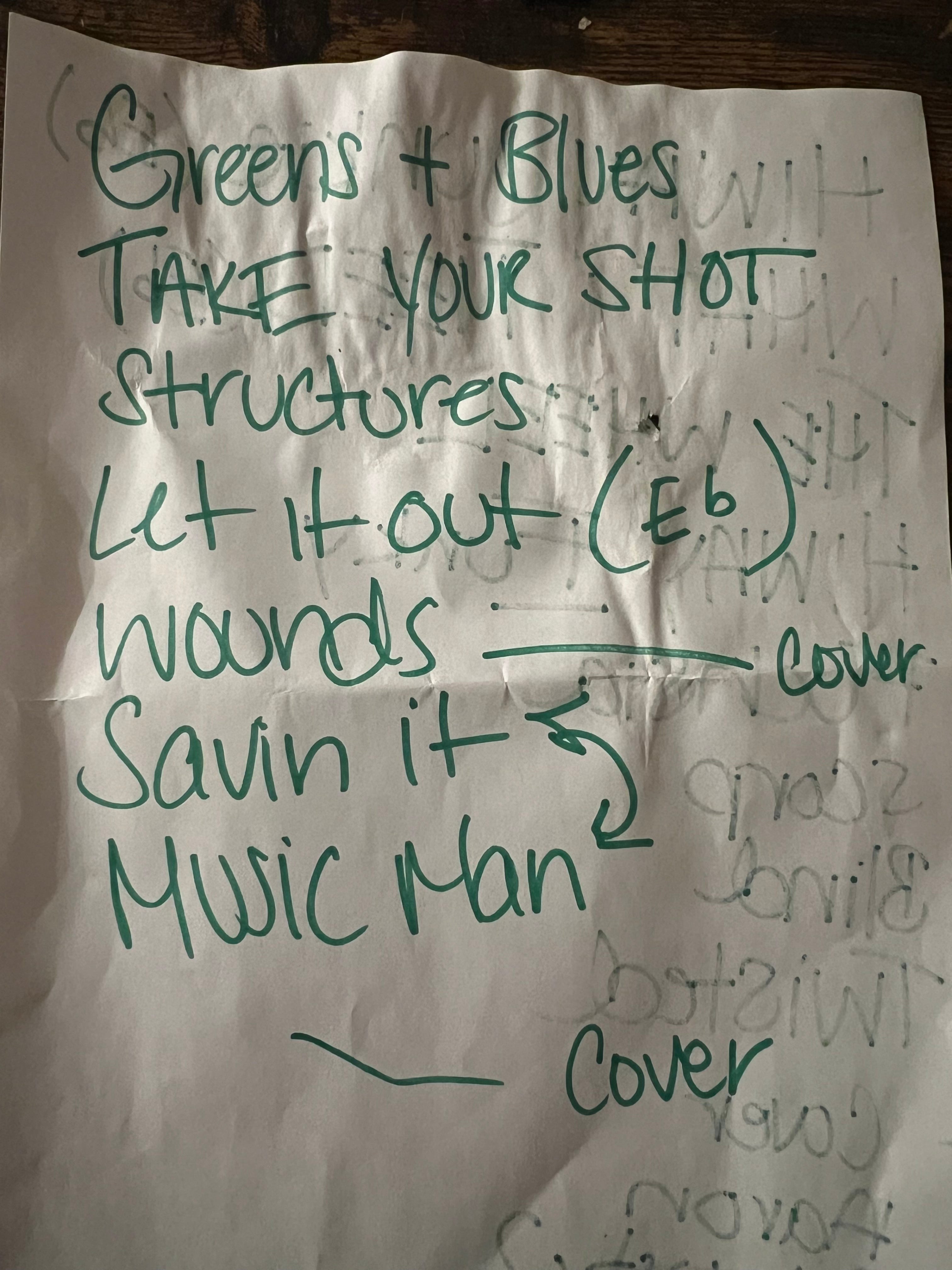
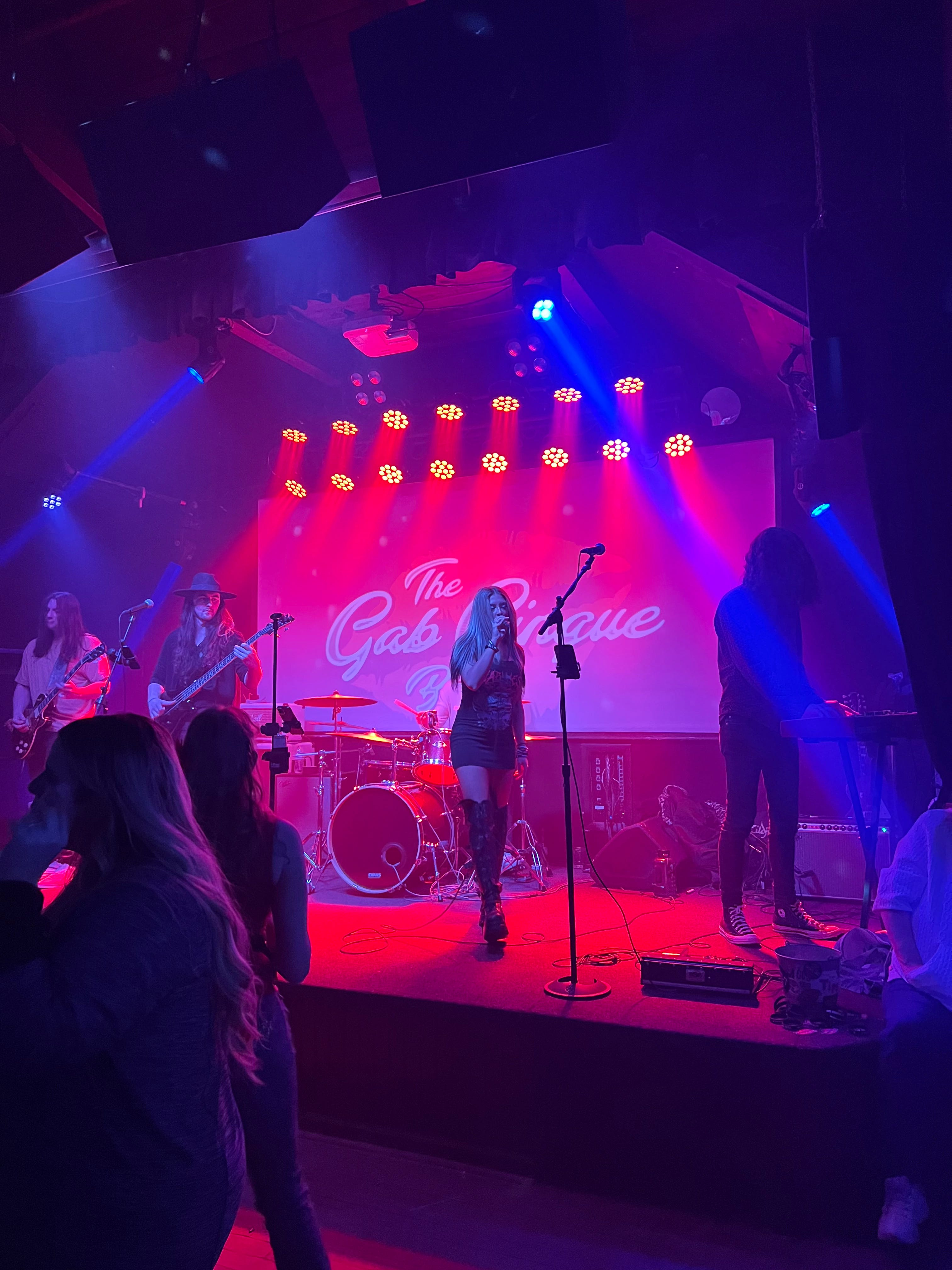
Good interview Jeff and Gab!